
Most fashion jewelry is a thin layer of plating over base metal, and that layer wears off easily. So when a brooch turns dull or leaves green marks on your skin, you want to clean it without damaging it.
This guide covers gentle home methods and shows you how to test any cleaner on a hidden spot first.
How to clean fashion jewelry without damaging the plating
Start dry. Rub the piece with a clean, dry microfiber cloth before any water. It lifts dust and skin oil, and most fashion jewelry needs nothing more.
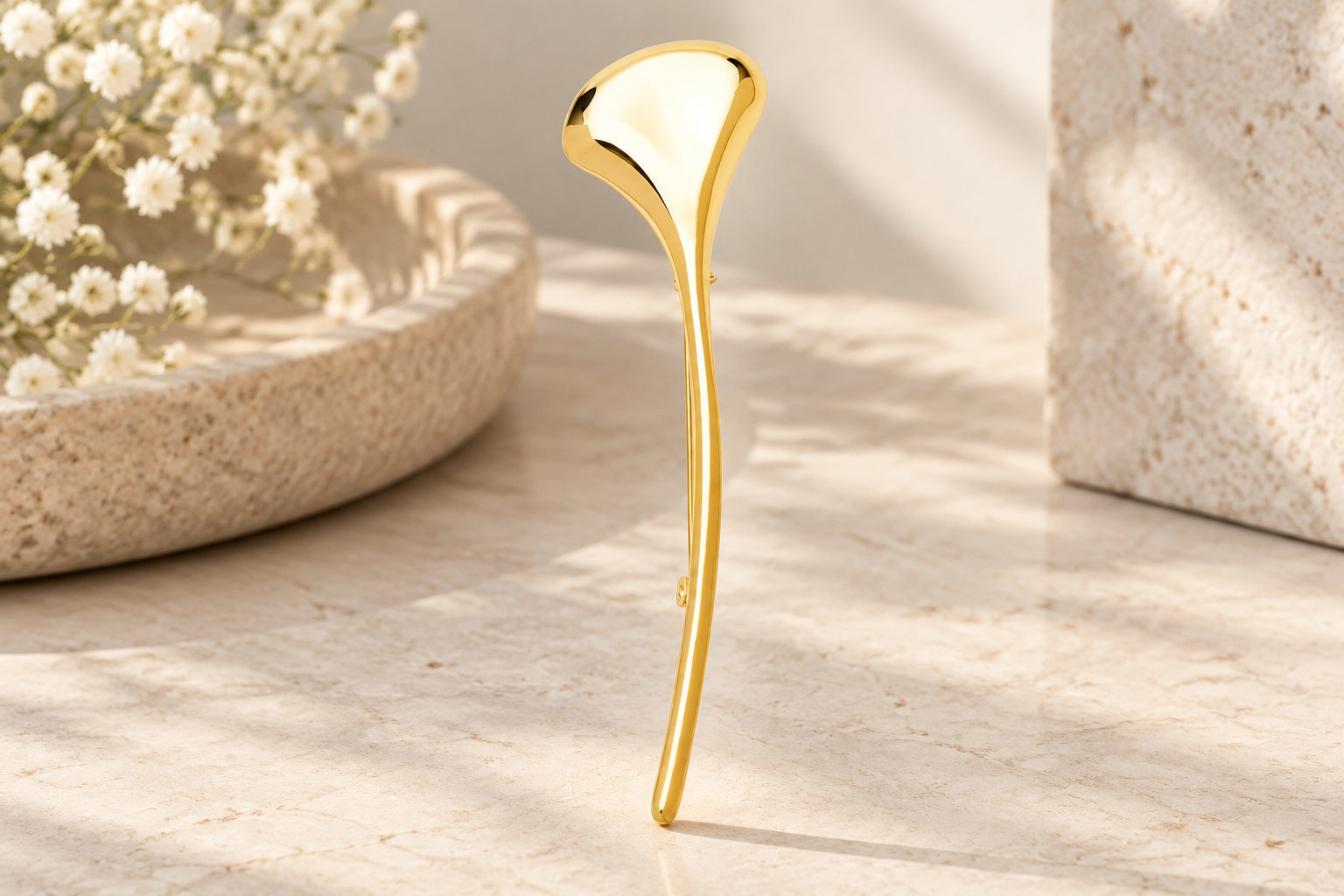
Only add a damp cloth if dust won’t lift, and dry the piece right away. For jeweled pieces, see the Vintage Jeweled Frog Brooch. Skip the soak, every time.
If dirt stays, work through these steps:
- Wipe only the dirty spot with a soft cloth or cotton swab dampened with warm water and one drop of mild dish soap. Never let it drip.
- Skip scrubbing, since plating and glue can wear. For sparkling pieces like the Jeweled Owl Family on a Branch Brooch from Brooch Paradise, keep water off the glued parts.
- Rinse with plain water on a second cloth, then pat the piece dry at once with a clean, soft cloth. Let it air-dry for a few minutes.
Plated, glued or stone-set: check the piece before any moisture
Check what the piece is made of. Plating is a thin layer over base metal, and rubbing wears it away. Glue and acrylic don’t tolerate moisture, so water can loosen stones.
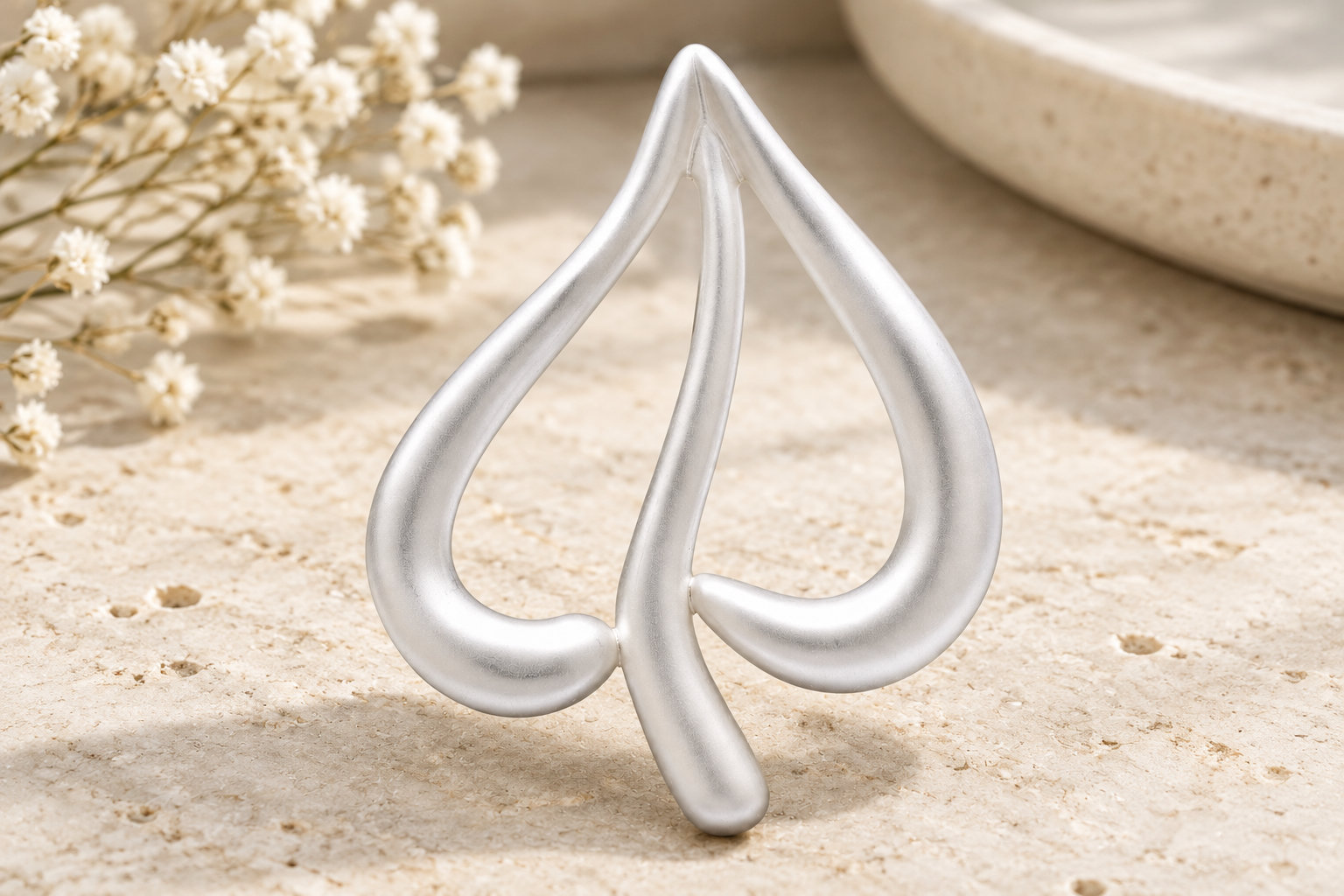
Worn plating looks dull or patchy, and green marks mean bare base metal. For a stone-set piece like the Faceted Teardrop with Baguette Halo Brooch, check the glue first. Skip water on any piece with glue or acrylic.
Before any cleaner
- Name each material: metal, plated brass, acrylic, resin.
- Look for glue around stones and joins.
- Check crystal backs for a reflective finish.
- Pick a hidden spot, like the back of the pin.
- Dab a little cleaner there and wait the time you plan to use.
- Look at that spot again. If the finish changed, stop.
- Don’t treat the wait time as proof. Check the piece again before cleaning.
The foil and baking soda method, and when to skip it
Line a bowl with aluminium foil, shiny side up. Add one tablespoon of salt, one of baking soda and one cup of hot water. Lay the piece in the mixture for five minutes.
The tarnish moves onto the foil, so the dark marks stay in the bowl. It sounds like magic, but it’s just a reaction. Keep it for solid metal you’re sure of.
The hot salty water can strip thin plating, and moisture can loosen the glue on a piece with stones or a foil backing. Baking soda rubbed on as a paste is abrasive too, so it scratches the metal.
For a rhinestone piece such as the Jeweled Cat on Crescent Moon Brooch from Brooch Paradise, a dry microfiber wipe is the safe choice.
Green marks and bad smells: gentle fixes that spare the plating
Green marks on your skin? That’s copper reacting with sweat. Moisture and acid turn the copper into green compounds that transfer to skin. Wash your skin with soap and water.
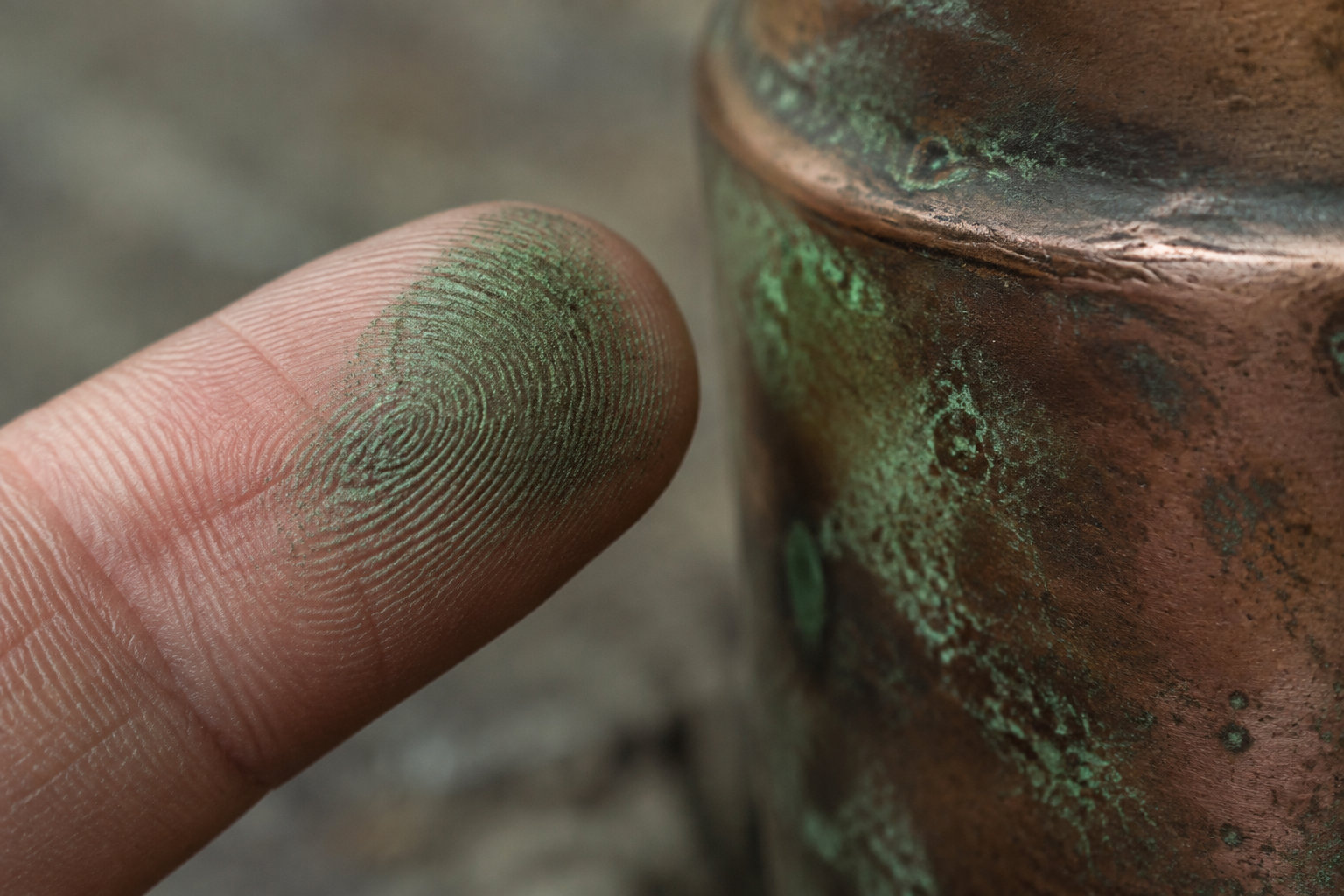
If the green keeps coming back, the plating has worn through to the copper or brass base. Cleaning lifts the residue, but it can’t restore worn plating. Wear that piece on dry days only, or let it go.
Gentle fixes for dullness and odour
Dull plating
- Start with a clean, dry, soft cloth.
- Skip polishing products and hard rubbing. They wear away a thin finish.
- For a pearl-look center, see the Jeweled Fan Shell with Pearl-Look Center Brooch, and begin with the dry cloth.
Odour and build-up
- Use a brief mild-soap spot clean, only where needed.
- Dry the piece fully right after.
Avoid on plated jewellery
- Vinegar, as a general cleaner.
- Lemon juice, as a general cleaner.
- Baking soda, which can scratch the finish.
Rhinestones and glued stones: wipe, never soak
Never soak glued rhinestones: moisture loosens the glue and clouds the foil behind flat-backed crystals. For a spot that won’t lift dry, dip a cotton swab in water with a little mild soap, then squeeze until barely damp.
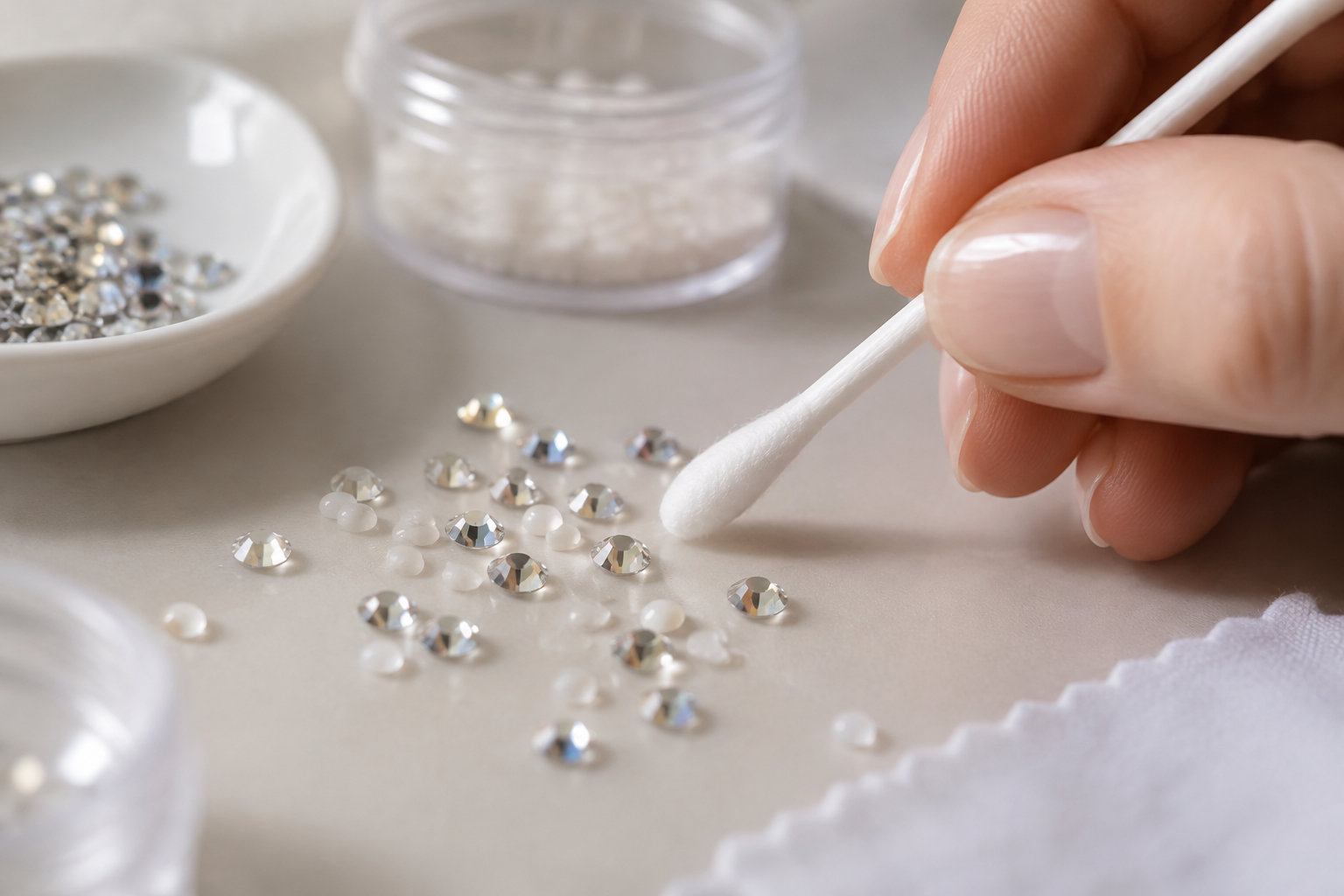
Dab the stone’s face, keeping the swab off the back and glue joins. Rinse with plain water on a clean swab, then dry it. Skip the bowl: a swab does this job better.
Acrylic, enamel, resin and faux pearls don’t tolerate soaking or scrubbing. Water loosens the glue, and abrasives scratch or dull the surface. If a stone rocks, sits unevenly or shows a gap at its setting, stop cleaning and leave the piece unworn until the stone is secured.
For glossy enamel, like the black enamel panther brooch, a dry cloth is the safe choice.
Toothpaste, vinegar and lemon: the cleaners that often cause harm
Toothpaste looks like a handy shortcut, but its grit can scratch the metal and wear away the plating. Vinegar and lemon juice are no better. Their acid attacks plated finishes and the glue that holds stones in place.
Keep all three out of your kit for costume jewelry. A piece that comes out dull or loose is much harder to fix than one you simply left alone.
For acrylic pieces, like the Abstract Colorblock Face Acrylic Brooch, skip all three cleaners below and stick to a dry wipe.
| Criteria | Baking-soda paste | Ultrasonic cleaner | Harsh household chemicals |
|---|---|---|---|
| Main risk | Abrasion scratches the finish | Vibration loosens stones | Chemicals damage the finish |
| Plated pieces | Scratches or wears the plating | Can damage thin plating | Can damage the finish |
| Glued stones | Avoid | Can loosen stones | Avoid |
Wiping, drying and storing to keep tarnish from coming back
Wipe your brooch after each wear, using a dry cloth to lift skin oil and sweat.
Put it on last, once perfume, lotion, hairspray and makeup have dried. For an enamel piece like the Enamel Flowering Cactus Brooch, take it off before a shower or swim. A quick wipe beats any cleaner.
Store your pieces this way:
- Keep each piece apart in a soft pouch or a lined box with compartments, so nothing rubs or scratches.
- Dry each piece fully before putting it away, since trapped moisture speeds up tarnish.
- Choose a cool, dry spot away from the bathroom, where damp air dulls finishes.
- Store the Long-Stem Minimalist Ginkgo Leaf Brooch from Brooch Paradise apart from perfume.
- Once a month, give everything a quick dry microfiber wipe.
Start dry, every time. A soft microfiber cloth handles most dust and skin oil, and water only comes in when a spot won’t lift. Before any cleaner, test a hidden spot and wait.
Your next step is easy: pick the piece you wear most, give it a dry wipe tonight, and store it apart from the rest.
Frequently asked questions
Can you clean fashion jewelry with white vinegar?
No, don’t use white vinegar on fashion jewelry. Its acid attacks thin plating and the glue that holds stones in place.
Use a soft cloth instead, or a barely damp cloth with a little mild soap, and dry the piece right away.
Does Dawn dish soap clean fashion jewelry?
Yes, but only for a piece that can take brief moisture. Add a few drops of mild dish soap to warm water, then wipe the dirt off with a damp cloth.
Don’t soak it, and dry it right away. Glued or acrylic pieces stay dry.
How do you clean costume jewelry that has turned green?
Gently wipe the green residue off with a soft cloth first. If it has transferred to your skin, wash the spot with soap and water.
If the green keeps coming back, the plating has worn through, and cleaning won’t fix that.
How can you stop fashion jewelry from tarnishing?
You stop tarnish by keeping moisture away from the piece. Wipe it after each wear, and put it on last, once perfume and lotion have dried.
Store it apart in a cool, dry place. Simple habits, but they do most of the work.
0 commentaire